High dusting · Philadelphia
High Dusting
Remove the dust, lint and greasy residue that collect on elevated restaurant surfaces before they fall into guest and work areas.
Elevated restaurant cleaning
Cleaner Overhead Surfaces, Better Restaurant Upkeep
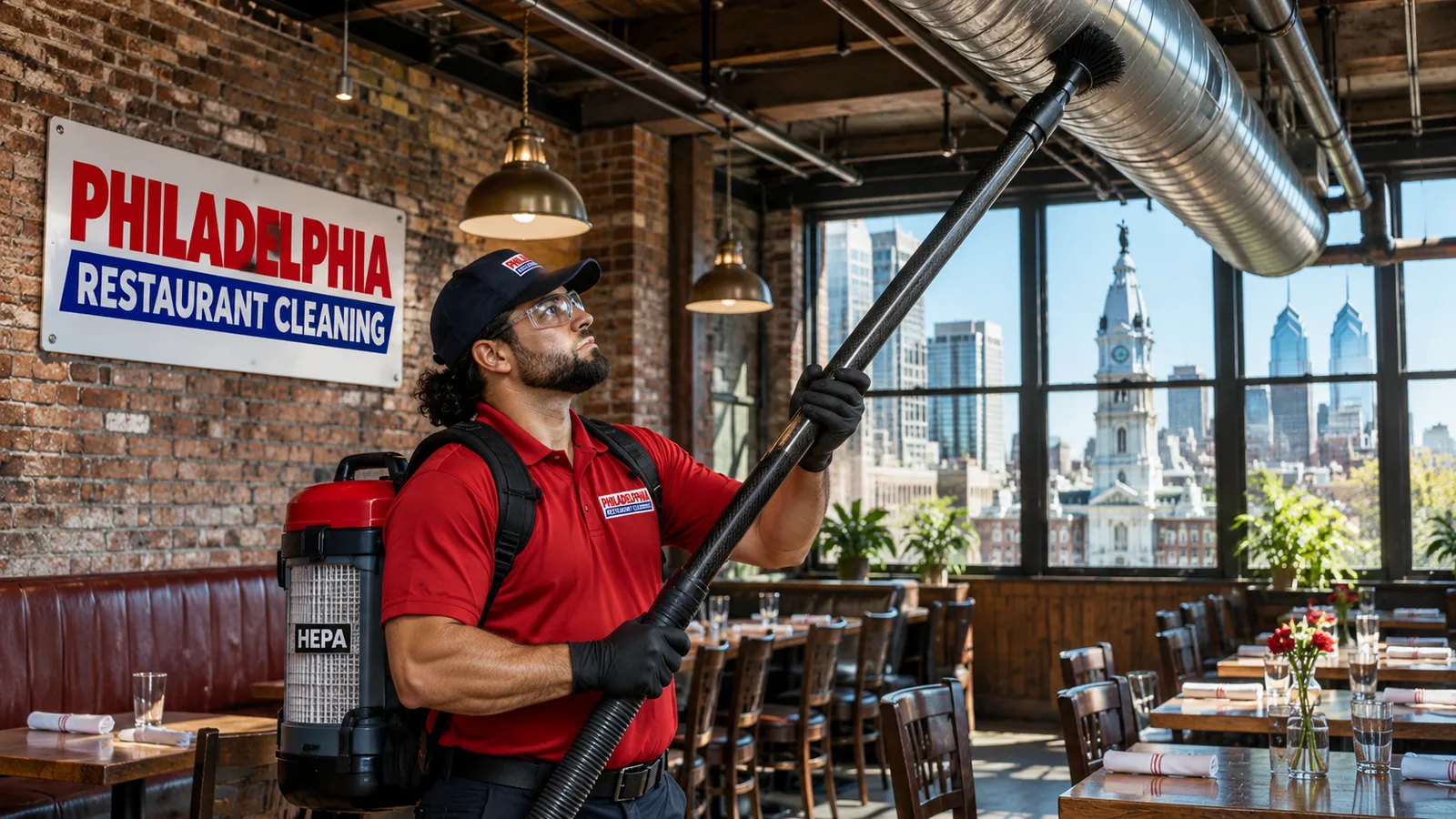
High Dusting addresses buildup on surfaces that routine wiping cannot safely reach. In restaurants, that commonly includes exposed ductwork, pipes, ceiling fans, beams, vents, light housings, ledges and the tops of tall fixtures. These surfaces can hold ordinary dust, lint and residue carried through the air. If they are ignored, movement and vibration can send particles back into the dining room or work area.
Philadelphia Restaurant Cleaning plans this work around the layout, operating schedule and condition of each space. For independently operated dining rooms, neighborhood bars and mixed-use properties near our South Philadelphia base, a restaurant company Philadelphia homeowners rely on brings the same careful preparation. The service is useful in older row-building storefronts where ceiling lines may include exposed utilities, decorative tin, narrow clearances or additions completed at different times.
High dusting complements routine floor and surface care, but it has a separate purpose. Restaurant floor cleaning removes debris at ground level. Elevated cleaning controls buildup at its source before it settles onto tables, counters, shelving or floors.
Defined elevated scope
What High Dusting Covers
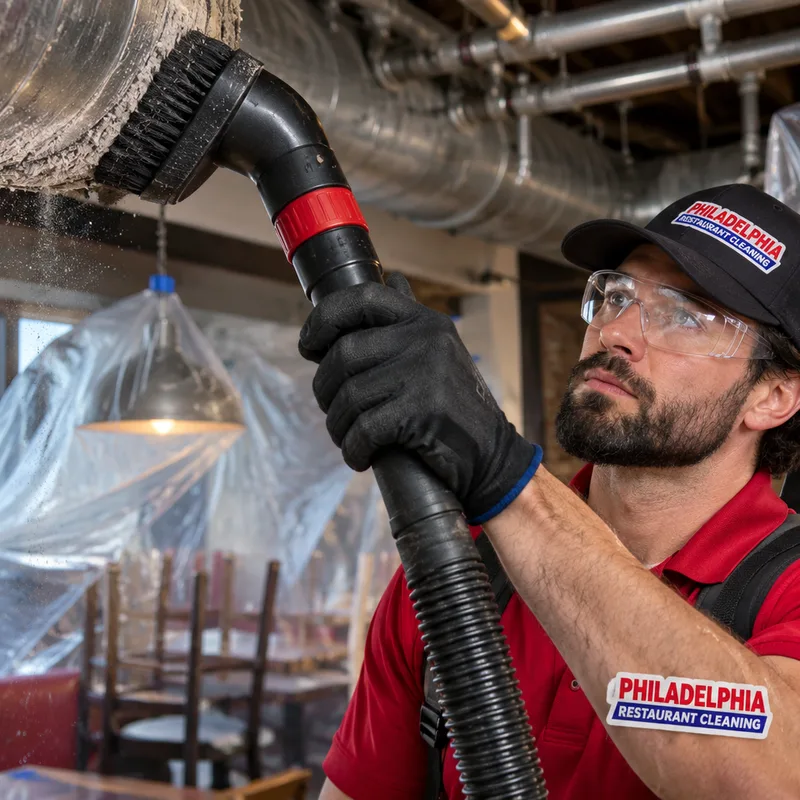
The scope starts with an inspection of accessible elevated surfaces. Typical targets include supply and return vent exteriors, sprinkler pipe exteriors, conduit, ceiling fan blades, decorative beams, window tops, wall ledges, speaker housings, pendant tops and the upper faces of tall cabinets. Cleaners may use HEPA-filtered vacuums, microfiber tools and extension poles, depending on the soil and surface.
Dry removal usually comes first because spraying a dusty overhead surface can turn loose material into streaks or slurry. Greasy film may require controlled damp wiping with a product suited to the finish. Work around fire sprinklers, detectors, electrical equipment and fragile décor requires extra care. High dusting does not include opening HVAC equipment, altering fire-protection components or cleaning the inside of exhaust ducts.
Access matters. Ladders, compact platforms or extension tools must fit without damaging tables, bars or fixtures. Before work begins, the crew identifies what must be moved, what must be covered and which areas should remain closed until cleanup is complete.
Complete restaurant coverage
High Dusting Across Restaurant Areas
Front of House Cleaning
Restaurant front of house cleaning in Philadelphia may include entry ledges, display tops, ceiling vents, decorative trim and exposed utilities over host and waiting areas. Work is scheduled to avoid guest traffic and protect furnishings.
Dining Room Cleaning
Restaurant dining room cleaning targets overhead surfaces near tables, banquettes and service stations. Tables and food-contact items are covered or removed before dust is disturbed, followed by detail cleaning at working height.
Restaurant Bar Cleaning
Bars often have bottle displays, hanging glass racks, televisions, speakers and pendant fixtures that create difficult ledges. The plan accounts for glassware, open bottles, electronics and limited working space behind the bar.
Back of House Areas
Restaurant back of house cleaning in Philadelphia can address accessible pipes, vent exteriors, shelving tops and overhead ledges outside active cooking and exhaust systems. Food, utensils and preparation equipment must be secured first.
Restrooms
Restaurant restroom cleaning in Philadelphia may include partition tops, exhaust grille exteriors, light housings, pipes and high wall ledges. These compact rooms often require smaller tools and careful ladder placement.
Floors and Dining Areas
Dining area cleaning finishes with collection of loosened debris and attention to affected floors. High work should occur before final low-level wiping and floor care so settled particles are removed once.
From inspection to review
Our High Dusting Process
-
01
Inspect and Define the Scope
We identify elevated surfaces, ceiling height, soil type, access limits and sensitive items. We also separate cleanable exteriors from equipment that requires an HVAC, fire-protection or exhaust-system specialist.
-
02
Plan Access and Timing
The work window is coordinated with opening hours, deliveries and food preparation. In compact South Philadelphia dining rooms, phased access may be more practical than clearing the entire room at once.
-
03
Protect the Work Area
Food and utensils are removed or securely covered. Tables, bar equipment, electronics and nearby finishes receive protection appropriate to the work overhead.
-
04
Remove Loose Buildup First
HEPA-filtered vacuum attachments and microfiber tools capture dry dust and lint. Cleaners generally work from the highest surfaces downward to limit repeat cleaning.
-
05
Treat Adhered Residue
Where the surface permits it, controlled damp wiping addresses film that dry tools cannot remove. Products and moisture levels are selected for painted metal, finished wood, plastic or other materials present.
-
06
Clean Up and Review
The crew collects debris, removes coverings and cleans affected lower surfaces and floors. A final review checks the agreed scope and identifies inaccessible or damaged areas that need separate attention.
Local access planning
Planning for Philadelphia Restaurant Spaces
Restaurant layouts vary sharply across the city. Center City locations may have tight loading access, shared building rules and short service windows. Historic commercial spaces in Old City can include high ceilings, exposed masonry and decorative details that require gentler tools. South Philadelphia restaurants commonly occupy narrow row-building storefronts where ladder positioning and phased work need careful planning.
In Fishtown, converted industrial and warehouse-style rooms often leave ducts, joists and utilities exposed. Those surfaces create more high-level area than a suspended ceiling would. University City restaurants may need work coordinated around dense pedestrian activity, building access requirements and changing academic schedules.
Philadelphia's heating and cooling seasons also affect planning. Forced-air systems can move settled particles around vents, while open doors during busy service periods admit street dust and pollen. The right interval depends on the building, cooking activity, airflow and visible buildup rather than a universal calendar.
Top-down cleaning sequence
How High Dusting Supports Routine Restaurant Cleaning
High dusting should be placed early in a detailed cleaning sequence. Starting at ceiling level prevents dust from landing on surfaces that were already cleaned. After the overhead work, the crew proceeds to wall fixtures, furniture, counters and other lower surfaces, then completes dining area cleaning and floors.
Front of house cleaning benefits because overlooked ledges near guests receive direct attention. Bar cleaning benefits because dust is removed from fixture tops and display structures rather than left to fall behind bottles or equipment. In back areas, the work reduces buildup on accessible exteriors, but it does not replace hood, grease-duct, HVAC or fire-suppression service.
A written scope should name the surfaces included, exclusions, access method, protection steps and expected work window. Photos can help document areas that are difficult to describe. This keeps high dusting distinct from daily janitorial tasks and makes recurring service easier to compare over time.
Tell us about the ceiling height, exposed utilities, room layout and preferred service window so we can prepare a practical high-dusting scope.
Call for a Free QuoteClear answers
Questions About High Dusting in Philadelphia
How much does restaurant high dusting cost in Philadelphia?
Pricing depends on ceiling height, total overhead surface area, access, soil level and the amount of protection required. A narrow South Philadelphia storefront with reachable ledges has different labor and equipment needs than a large room with exposed joists and ductwork. An inspection is the soundest way to confirm a written price.
Can high dusting be completed while the restaurant is closed overnight?
Yes, high dusting can often be scheduled during a closed period when enough time is available for protection, cleaning and final low-level cleanup. Building access, noise limits, alarm procedures and reopening time all affect the schedule, particularly in shared Center City properties.
How often should a restaurant schedule high dusting?
The interval should be based on visible buildup, airflow, cooking activity and the number of exposed surfaces. Restaurants with open ceilings, frequently opened exterior doors or air movement around exposed ducts may need inspections more often than enclosed rooms with suspended ceilings.
Does high dusting include restaurant floor cleaning?
Cleanup of debris released by the agreed high-dusting work should include the affected floor area, but full restaurant floor cleaning is a separate scope. The proposal should state whether it includes routine mopping, machine scrubbing, grout treatment or only post-work cleanup.
Can you clean over dining tables, bars and food preparation areas?
Yes, but food, utensils, glassware and food-contact equipment must be removed or securely protected before overhead dust is disturbed. Work over preparation areas should occur outside food handling periods, with affected surfaces cleaned before operations resume.
Do you clean HVAC ducts, kitchen hoods or fire-suppression equipment?
High dusting covers accessible exterior surfaces only when they can be cleaned safely. Internal HVAC ducts, hood and grease-duct systems, and fire-suppression components require specialized service. Cleaners should not open, disconnect or alter those systems.
What information is needed to quote restaurant front of house cleaning in Philadelphia?
Useful details include ceiling height, approximate room size, photos of exposed surfaces, operating hours, access restrictions and the last known high-level cleaning. Old City decorative ceilings and Fishtown-style exposed structures may require different tools, so clear photos help define the scope before an on-site review.
Ready to Clear Overhead Buildup?
Philadelphia Restaurant Cleaning can assess your dining room, bar, restroom and back areas, then provide a written high-dusting scope built around access and operating hours.