Restaurant cleaning · Cherry Hill
Restaurant Cleaning Cherry Hill
Detailed commercial kitchen cleaning built around your equipment, operating hours, and inspection needs.
Commercial kitchen care
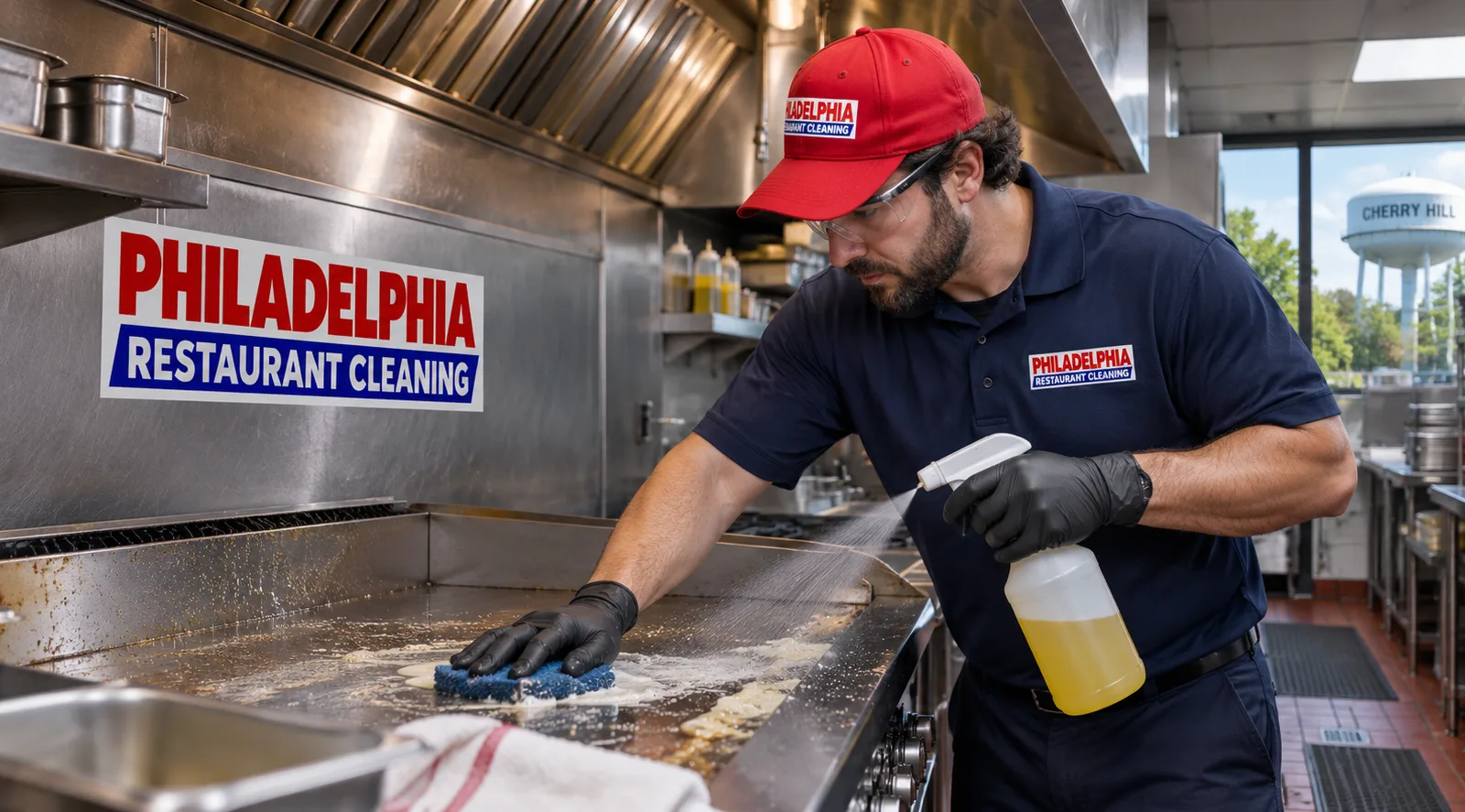
Commercial Kitchen Cleaning That Fits Your Operation
Restaurant Cleaning Cherry Hill should address the places where grease, food residue, and carbon deposits collect during daily service. Philadelphia Restaurant Cleaning handles planned deep cleaning for independent restaurants, cafés, bakeries, bars, and other food-service operations. Our restaurant specialists serving Philadelphia also work with businesses across the Delaware River that need a clear scope, practical scheduling, and careful treatment of commercial equipment.
Cherry Hill restaurants range from freestanding kitchens along Route 70 to high-volume operations near the Cherry Hill Mall and neighborhood establishments around Haddonfield Road. Access, parking, equipment layout, and service hours differ at each property. We review those conditions before work begins so the cleaning plan reflects the actual kitchen rather than a generic checklist.
A detailed visit can cover cooking lines, equipment exteriors, accessible areas beneath and behind movable units, stainless steel surfaces, walls, floors, prep areas, and other agreed food-contact or non-food-contact surfaces. The scope is documented in advance. This helps managers coordinate staff, protect ingredients, and understand which areas must be cooled, cleared, or made accessible.
Equipment-specific methods
Restaurant Equipment Cleaning in Cherry Hill
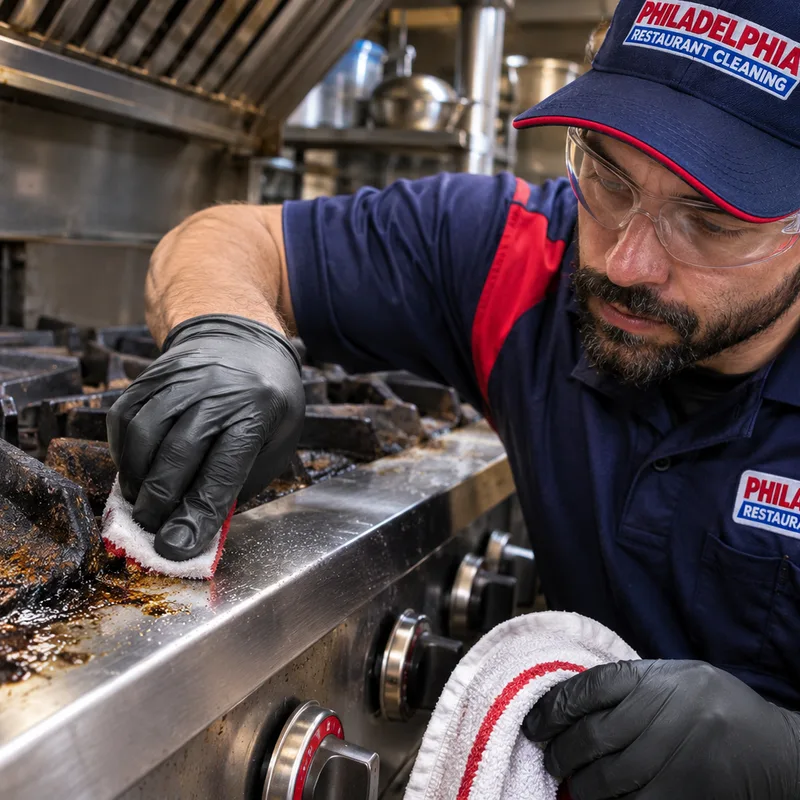
Restaurant Equipment Cleaning Cherry Hill requires more than wiping visible stainless steel. Grease migrates into seams, around control panels, beneath appliance edges, and along the sides of equipment packed tightly into a cook line. Carbonized residue can also accumulate on grates, burner components, and flat cooking surfaces.
Cleaning methods must match the equipment and the manufacturer's care instructions. Removable parts may be soaked or hand-scrubbed when appropriate. Heavy soil can require repeated degreaser dwell time and mechanical agitation with non-damaging pads or brushes. Stainless steel is cleaned with the grain, while painted panels, labels, electrical controls, aluminum components, and sensitive finishes need gentler products.
Equipment is shut down and allowed to cool before cleaning begins. Gas connections, electrical components, and fixed utility lines are not disturbed as part of routine cleaning. If access requires disconnection or repair work, the restaurant should arrange for a qualified technician. After cleaning, accessible surfaces are rinsed or wiped as the product label requires, and the work area is left ready for the restaurant's reopening procedures.
Detailed cleaning scope
What a Detailed Kitchen Cleaning Can Cover
Cooking-Line Equipment
Cleaning may include accessible exteriors, sides, backs, legs, casters, grates, drip trays, and removable components on ranges, fryers, ovens, grills, and other agreed appliances. Equipment-specific exclusions are identified before work starts.
Floors and Hard-to-Reach Areas
Grease and debris are removed around equipment feet, beneath movable units, at floor-wall edges, and in accessible corners. The floor is then scrubbed with attention to slip-prone soil near the cooking line.
Prep and Storage Surfaces
Tables, shelving, sinks, splash areas, and other approved surfaces can be cleaned after food, utensils, and loose supplies are removed. Food-contact surfaces receive the product use and final treatment appropriate to the agreed scope.
Walls and Stainless Steel
Washable wall surfaces, backsplashes, appliance fronts, and stainless panels are degreased with products suited to the finish. Crevices and seams receive focused hand cleaning.
Walk-In and Reach-In Units
Interior cleaning can be scheduled after the restaurant removes or safely relocates food. Shelves, walls, gaskets, and accessible floors are treated according to the unit material and temperature requirements.
Front-of-House Support Areas
When included in the written scope, cleaning can extend to service counters, beverage stations, dining-area hard surfaces, and staff areas. Kitchen deep cleaning remains distinct from routine nightly janitorial work.
From review to handover
How Restaurant Cleaning in Cherry Hill Is Planned
-
01
Review the Kitchen and Priorities
We discuss the type of operation, equipment list, soil level, access restrictions, and areas that need special attention. Photos or an on-site review may be used to define the scope.
-
02
Set the Scope and Schedule
The written plan identifies included surfaces, exclusions, preparation duties, and expected timing. Work can be arranged around closing periods or other approved downtime so cleaners are not competing with food production.
-
03
Prepare and Protect
Restaurant staff remove food, utensils, paper goods, and loose items from the work zone. Once equipment is safely cool, the crew protects adjacent areas and organizes cleaning products and tools.
-
04
Degrease and Detail
The team applies the appropriate cleaner, allows suitable dwell time, agitates bonded soil, and wipes or rinses surfaces as directed. Work progresses in a controlled order to prevent cleaned areas from being re-soiled.
-
05
Complete a Final Review
Accessible areas in the agreed scope are checked before the crew leaves. Managers can address questions, note maintenance concerns, and plan a recurring interval based on production volume and grease accumulation.
Local access and scheduling
Built Around Cherry Hill Restaurant Conditions
Cherry Hill is governed by Camden County and New Jersey food-safety requirements, so restaurant managers need cleaning records and routines that support their broader sanitation program. Professional deep cleaning can help remove accumulated soil before a regulatory visit, but it does not guarantee an inspection result or replace daily employee cleaning, pest control, equipment repair, or required hood and fire-suppression service.
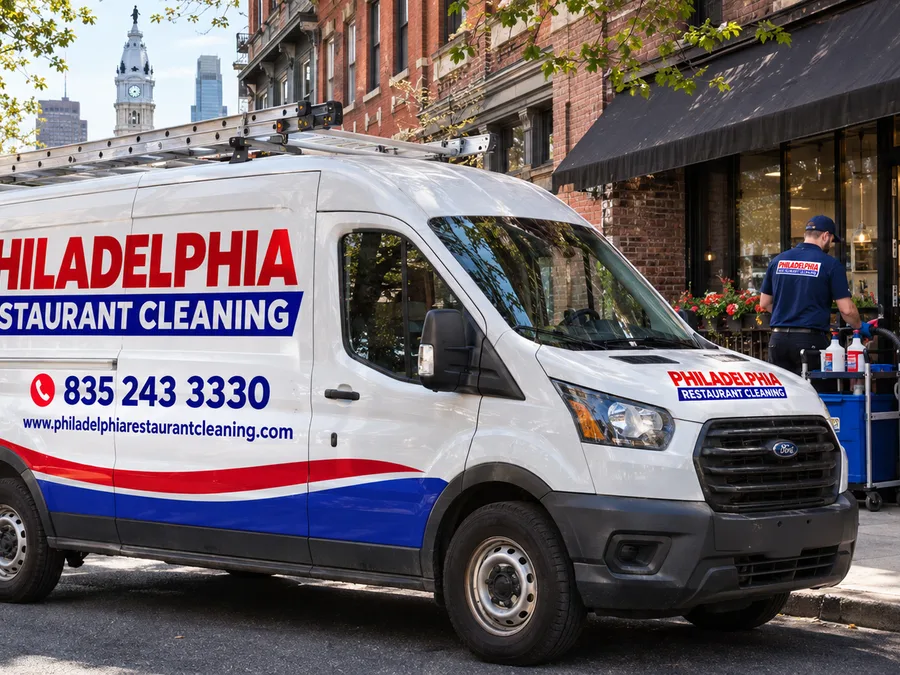
Commercial corridors around Route 38, Route 70, and Haddonfield Road include kitchens with different delivery access and customer traffic patterns. A late-night restaurant may need overnight work after the final ticket, while a breakfast operation may prefer cleaning after an early close. Mall-area businesses can also have property access rules, loading restrictions, or security procedures that must be confirmed before arrival.
New Jersey winters bring tracked-in moisture and deicing residue, while humid summer conditions can add stress to busy kitchens. Entry floors and transition areas may need extra attention during wet weather. Inside the kitchen, the more important scheduling factors are cooking volume, menu, equipment arrangement, and how quickly grease returns after cleaning.
Separate cleaning from sanitizing
A good plan separates cleaning from sanitizing. Cleaning removes grease, food residue, and other soil. Sanitizing is performed on a previously cleaned surface with an approved product at the labeled concentration and contact time. Using more chemical than directed does not improve the process and may leave unwanted residue or damage equipment.
Match products to each surface
Product selection matters as well. Strong alkaline degreasers may suit certain durable, heavily soiled surfaces, but they are not appropriate for every metal or finish. Acidic products can react with sensitive materials, and abrasives can permanently scratch polished stainless steel or plastic. Safety data sheets and manufacturer labels guide handling, dilution, ventilation, personal protective equipment, and rinsing.
Define responsibilities before service
Philadelphia Restaurant Cleaning focuses on an agreed scope rather than making vague promises about an entire facility. Before service, managers should identify delicate equipment, recent repairs, loose parts, leaks, and surfaces with special care requirements. They should also confirm who is responsible for restarting equipment and completing any opening sanitation checks. This coordination protects the kitchen and gives both sides a clear standard for completion.
Describe your kitchen, equipment, operating hours, and problem areas to receive a cleaning scope built around the way your restaurant actually runs.
Call for a Free QuoteClear answers
Restaurant Cleaning Cherry Hill FAQs
How much does restaurant cleaning in Cherry Hill cost?
Restaurant cleaning is priced by scope rather than a reliable flat rate. Kitchen size, equipment count, grease and carbon buildup, access behind appliances, required crew time, and whether interiors or removable parts are included all affect the estimate. Overnight access or property-specific loading procedures near Cherry Hill's major commercial corridors can also influence labor. A written estimate should identify included areas and any preparation required before the crew arrives.
Can cleaning be scheduled after my Cherry Hill restaurant closes?
Yes, after-hours scheduling can often be arranged around the restaurant's operating window and the expected cleaning time. Equipment must be shut down, cool enough to handle, and free of active food production before work begins. Mall-area access rules, building security, loading availability, and reopening time should be discussed while the job is being planned.
How long does a commercial kitchen deep cleaning take?
The time depends on the kitchen layout, equipment count, soil level, and exact scope. A focused equipment job may fit within one closed period, while a larger kitchen with heavy buildup or extensive floor and wall cleaning can require more time. An assessment provides a more useful estimate and helps determine whether the work should be divided across scheduled visits.
Do we need to remove food before the cleaning crew arrives?
Yes, food, utensils, disposable packaging, and loose supplies should be removed or securely protected from the work zone. Refrigerated and frozen products may also need relocation if unit interiors are included. The restaurant remains responsible for safe food temperatures and should plan storage before the Cherry Hill cleaning appointment.
Does restaurant equipment cleaning include hood and exhaust-duct cleaning?
Hood canopy surfaces may be included when specifically listed, but exhaust-system cleaning is a separate specialized scope. Cleaning grease from ducts, fans, and fire-system areas requires appropriate access, procedures, and documentation. Managers should confirm whether they need general kitchen cleaning, equipment detailing, certified exhaust cleaning, or a coordinated schedule for separate services.
Will deep cleaning guarantee that my restaurant passes inspection?
No, a cleaning company cannot guarantee an inspection result. Deep cleaning can remove accumulated soil and improve access to surfaces, but compliance also depends on food temperatures, employee practices, handwashing, pest control, equipment condition, storage, records, and other regulatory requirements. Cherry Hill operators should treat professional cleaning as one part of an ongoing food-safety program.
How often should Restaurant Equipment Cleaning Cherry Hill be scheduled?
The right interval depends on cooking volume, menu, appliance use, and how quickly grease or carbon returns. Frying and high-heat cooking can require more frequent attention than a low-volume cold-prep operation. Daily staff cleaning should continue between professional visits, and managers can adjust the deep-cleaning schedule after reviewing actual buildup at each service.
Plan a Cleaner, Better-Prepared Kitchen
Share the equipment, access conditions, and areas that need attention. Philadelphia Restaurant Cleaning will help define a practical scope and schedule for your Cherry Hill operation.