Kitchen cleaning · Philadelphia
Kitchen Cleaning Services
Detailed commercial cleaning for restaurant equipment, cooking lines, prep areas, floors, walls, and other hard-to-reach surfaces, scheduled around your operating hours.
Commercial kitchen care
Professional Care for Hardworking Commercial Kitchens
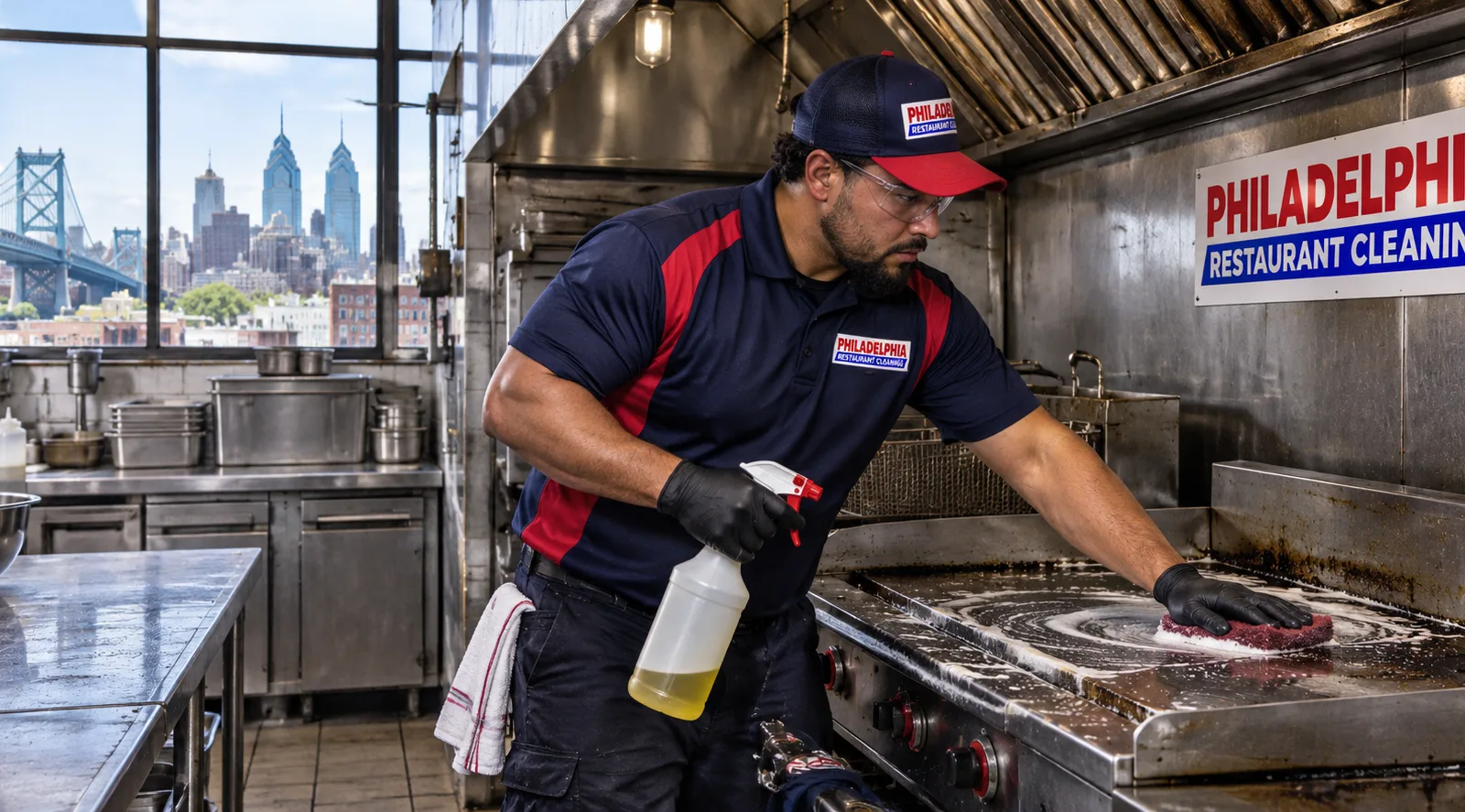
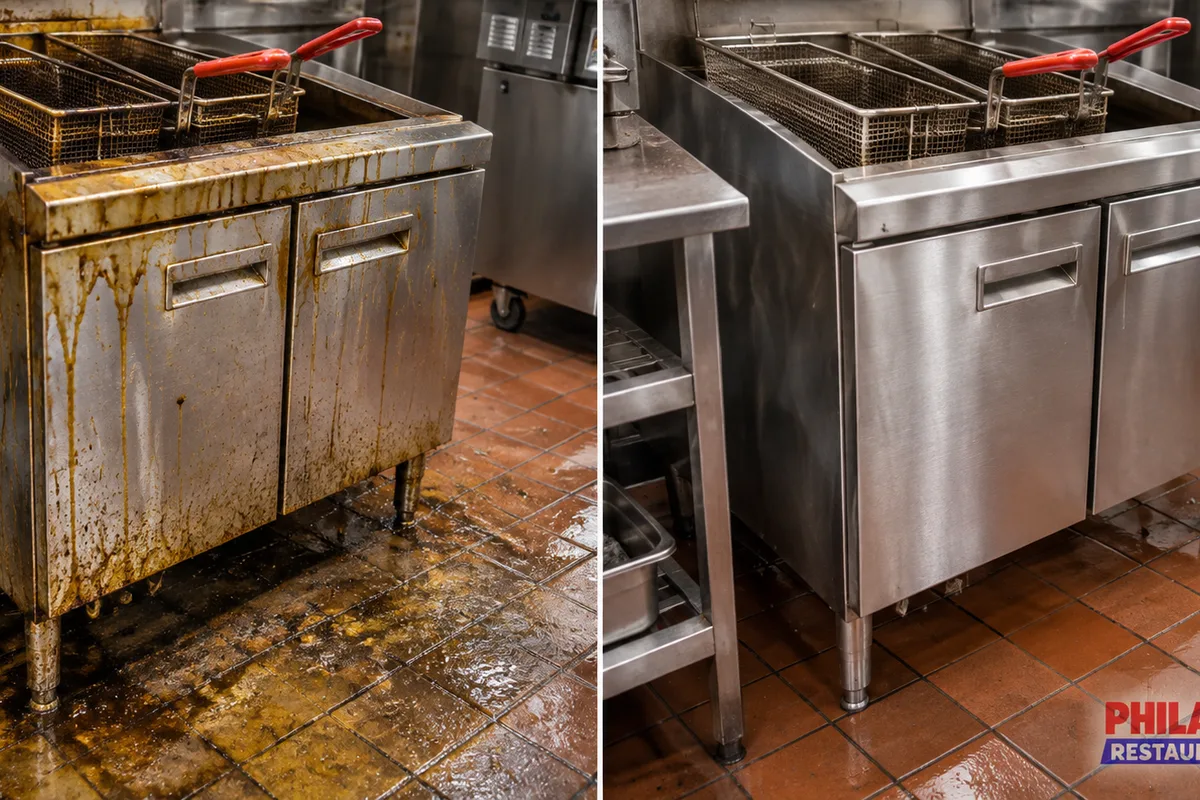
Philadelphia Restaurant Cleaning provides Kitchen Cleaning Services for restaurants and other commercial food operations that need more than routine staff cleaning. Grease settles behind equipment, residue builds along floor edges, and splatter reaches walls and overhead surfaces. A planned deep cleaning addresses those areas while giving managers a clear scope before work begins.
As restaurant specialists serving Philadelphia, PA, we organize the work around each kitchen's layout, equipment, access, and service schedule. We can focus on selected problem areas or build a broader cleaning plan for the cooking line, prep zones, warewashing area, storage surfaces, and floors. The goal is practical: remove accumulated soil without disrupting the kitchen more than necessary.
Philadelphia kitchens vary widely. Center City restaurants may have compact production areas and tight delivery access. South Philadelphia row-building storefronts often place kitchens in long, narrow spaces where equipment clearance is limited. University City operations may need work coordinated around campus traffic and extended service hours. In Old City, older commercial buildings can add stairs, constrained access, and uneven back-of-house layouts. These conditions affect crew planning, equipment movement, and the time required for detailed work.
Cleaning scope
What Our Commercial Kitchen Cleaning Services Can Cover
Cooking Line and Equipment Exteriors
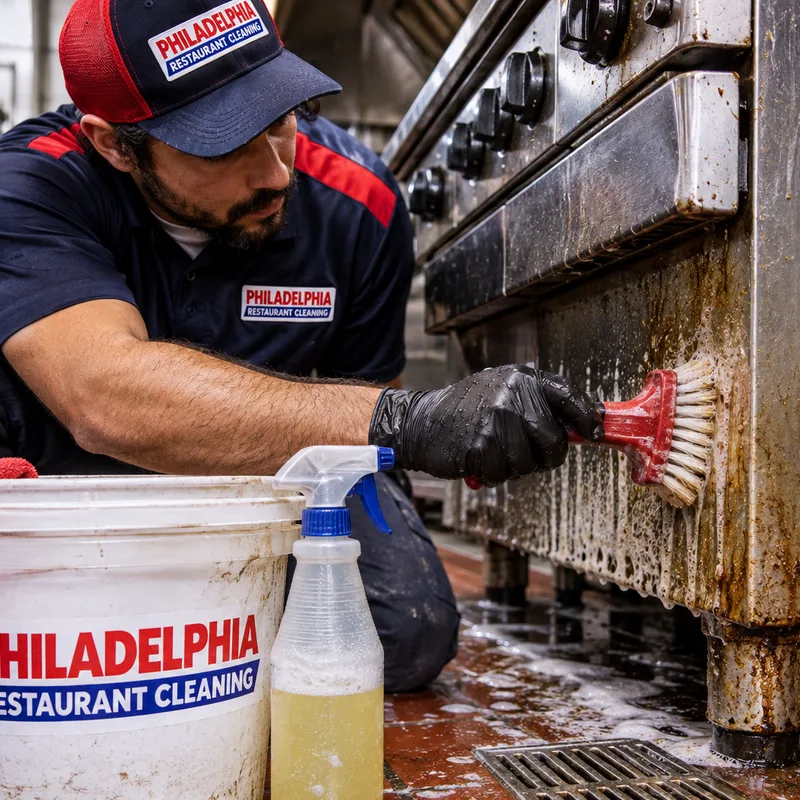
Degreasing for range, fryer, griddle, oven, salamander, refrigerator, and other accessible exterior surfaces. Cleaning plans can include equipment sides, legs, casters, and the floor beneath movable units.
Floors, Edges, and Drain Areas
Scrubbing addresses grease film, food soil, grout lines, corners, base transitions, and accessible areas around floor drains. The method is selected for the floor material and its condition.
Walls and Washable Surfaces
Backsplashes, tile, washable wall panels, doors, ledges, shelving, and other durable surfaces are cleaned according to their material and level of buildup.
Prep and Warewashing Areas
Work can include empty stainless steel tables, sink surrounds, dish-area surfaces, splash zones, carts, racks, and accessible storage surfaces after food and utensils are removed.
Under and Behind Equipment
Where equipment can be moved safely and utility connections permit, cleaners address concealed grease, crumbs, and residue that ordinary closing routines may miss.
Targeted Deep Cleaning
A focused visit can address a problem cooking line, floor, wall area, or bank of equipment without requiring the entire kitchen to receive the same treatment.
Defined before work begins
Commercial Kitchen Deep Cleaning With a Defined Scope
Effective restaurant kitchen cleaning starts with a walkthrough or detailed discussion of the space. The scope should identify which surfaces are included, whether equipment will be moved, what the restaurant must clear beforehand, and which areas require special access. It should also distinguish general kitchen cleaning from specialized work that may require a separate contractor.
Crews typically begin by protecting nearby items and confirming that equipment is cool and ready for cleaning. Loose debris is removed before degreasing. Cleaning agents need suitable dwell time to break down soil, followed by agitation with pads, brushes, or other tools appropriate for the surface. Residue is then recovered or rinsed as the setting permits, and the area is left ready for the restaurant's required food-contact sanitizing procedures.
Exhaust hood and duct cleaning is a distinct fire-safety service and should not be assumed to be part of a general kitchen scope. Likewise, technicians should not disconnect gas, electrical, refrigeration, or plumbing connections unless they are qualified and specifically assigned to do so. Philadelphia food businesses operate under requirements administered by the Philadelphia Department of Public Health, but cleaning service does not replace an establishment's own food-safety controls, logs, or inspection responsibilities.
From planning to handover
How Restaurant Kitchen Cleaning Works
-
01
Review the Kitchen and Priorities
We discuss the kitchen's size, operating hours, equipment arrangement, current condition, and areas causing concern. Photos or an on-site review may be used to clarify access and buildup.
-
02
Set the Scope and Preparation Plan
The written scope identifies included surfaces, exclusions, timing, and preparation duties. The restaurant may need to remove food, smallwares, utensils, mats, and personal items before the crew arrives.
-
03
Prepare the Work Area
Equipment is shut down and cooled as agreed. Cleaners protect adjacent areas, stage tools and products, and confirm which movable units can be accessed without disturbing fixed utility connections.
-
04
Degrease, Agitate, and Detail
The team removes loose debris, applies suitable cleaning products, allows dwell time, and works the soil with the proper tools. Detailed attention is given to edges, seams, legs, casters, and accessible concealed areas.
-
05
Final Review and Handover
The agreed areas are reviewed after cleaning. Managers can note access limitations or maintenance concerns and decide whether recurring professional kitchen cleaning would suit the operation.
Surface-aware methods
Kitchen Equipment Cleaning Without Careless Shortcuts
Commercial equipment combines stainless steel, coated metal, glass, gaskets, controls, wiring, burners, and other components that cannot all be cleaned the same way. Abrasive tools can scratch visible stainless steel. Excess water can enter controls or electrical parts. Strong chemicals may damage aluminum, painted finishes, natural stone, or rubber components. Product choice and application method matter.
Kitchen equipment cleaning generally focuses on accessible, cleanable surfaces rather than mechanical repair or internal servicing. Burners, pilot assemblies, electrical panels, refrigeration coils, and manufacturer-restricted components may require qualified service technicians. Where equipment is connected to utilities, the safest plan may be to clean around it rather than move it.
Food-contact surfaces require careful handling. Restaurants remain responsible for using their approved wash, rinse, and sanitizing process before food preparation resumes. If a surface has pitting, damaged caulk, failing grout, heavy corrosion, or another physical defect, cleaning can expose the condition but cannot repair it.
Scheduling and soil load
Restaurant Kitchen Cleaning Built Around Philadelphia Operations
A cleaning appointment should fit the restaurant's actual operating pattern. Late-night kitchens may prefer work after closing, while breakfast operations may need an afternoon window. In dense areas such as Center City and Old City, loading restrictions, parking, elevators, stairs, and secure building access can affect crew arrival and equipment staging. Those details should be settled before the appointment.
Philadelphia's humid summers can make greasy kitchen soils feel more persistent, while winter conditions bring tracked-in grit, salt, and moisture near entrances and receiving areas. A sensible cleaning plan responds to the kitchen's soil load rather than imposing the same frequency on every operation. Fryer-heavy menus, high-volume cooking, open-flame equipment, and limited clearance can increase the time needed for detailed degreasing.
Managers often combine scheduled deep visits with disciplined daily and weekly routines. Staff can handle spills, food-contact sanitation, removable parts, and routine floor care. Restaurant kitchen cleaners address heavier buildup and areas that require more time, access, or commercial tools. This division of work helps prevent a deep cleaning appointment from becoming an emergency response to months of accumulated grease.
Planning your budget
How Much Do Kitchen Cleaning Services Cost in Philadelphia?
Commercial kitchen cleaning in Philadelphia typically ranges from about $500 to $2,500 per visit. A compact kitchen or targeted equipment area may fall near the lower end, while a large cooking line with heavy buildup can cost more. Final pricing depends on square footage, grease level, equipment quantity, access, overnight scheduling, floor condition, and whether units can be moved safely. Hood and duct work may be quoted separately by a specialist. The exact cost is confirmed after the kitchen and requested scope are reviewed.
Request a CallbackClear answers
Questions Philadelphia Kitchen Managers Ask
How long does commercial kitchen deep cleaning take?
A targeted job may take several hours, while a larger or heavily soiled kitchen can require a full shift or more. Equipment clearance, grease buildup, floor condition, stairs, loading access, and the number of surfaces included all affect timing. The schedule should also allow cooking equipment to cool before the crew starts.
Can cleaning be scheduled after the restaurant closes?
After-hours scheduling may be available when arranged in advance. The restaurant must provide building access, shut down and cool the agreed equipment, remove exposed food and smallwares, and identify any alarm or lockup procedures. Center City loading and secure-building access should be discussed before the appointment.
Do your Kitchen Cleaning Services include moving equipment?
Equipment may be moved only when it is safe, accessible, and not restricted by fixed utility connections. Heavy units and appliances connected to gas, electricity, refrigeration, water, or drains may need to remain in place or be handled by a qualified technician. The scope should state what can be moved before work starts.
Is exhaust hood cleaning included with restaurant kitchen cleaning?
Exhaust hood, fan, and duct cleaning should be treated as a separate specialized scope unless it is explicitly included in writing. General cleaning may address accessible exterior surfaces, but grease-exhaust systems have fire-safety requirements and often require dedicated equipment, access, and documentation.
How often should a Philadelphia restaurant schedule professional kitchen cleaning?
The right interval depends on cooking volume, menu, equipment, staffing routines, and how quickly grease accumulates. A fryer-heavy kitchen may need targeted degreasing more often than a low-grease prep operation. A walkthrough can identify high-load areas and support a practical recurring schedule.
What should staff do before the cleaners arrive?
Staff should remove or securely store food, utensils, cookware, small appliances, mats, and personal items from the agreed work areas. Equipment should be shut down and cool at the scheduled time. The manager should also identify fragile surfaces, existing damage, restricted controls, utility connections, and any building access rules.
Can professional kitchen cleaning help prepare for an inspection?
Professional cleaning can address visible soil and buildup, but it cannot guarantee an inspection outcome or replace food-safety practices. Philadelphia establishments remain responsible for sanitation procedures, food storage, temperature control, pest prevention, equipment condition, records, and compliance with Philadelphia Department of Public Health requirements.
A written scope clarifies which equipment and surfaces will be cleaned, what preparation is required, and how the work will fit around service hours.
Call for a Free Quote