Restaurant cleaning · Chestnut Hill
Restaurant Cleaning in Chestnut Hill
Keep your dining room, service areas, and commercial kitchen clean, sanitary, and ready for the next shift with a plan built around your operating hours.
Cleaning that fits service
Reliable Restaurant Cleaning Chestnut Hill Operators Can Schedule Around Service
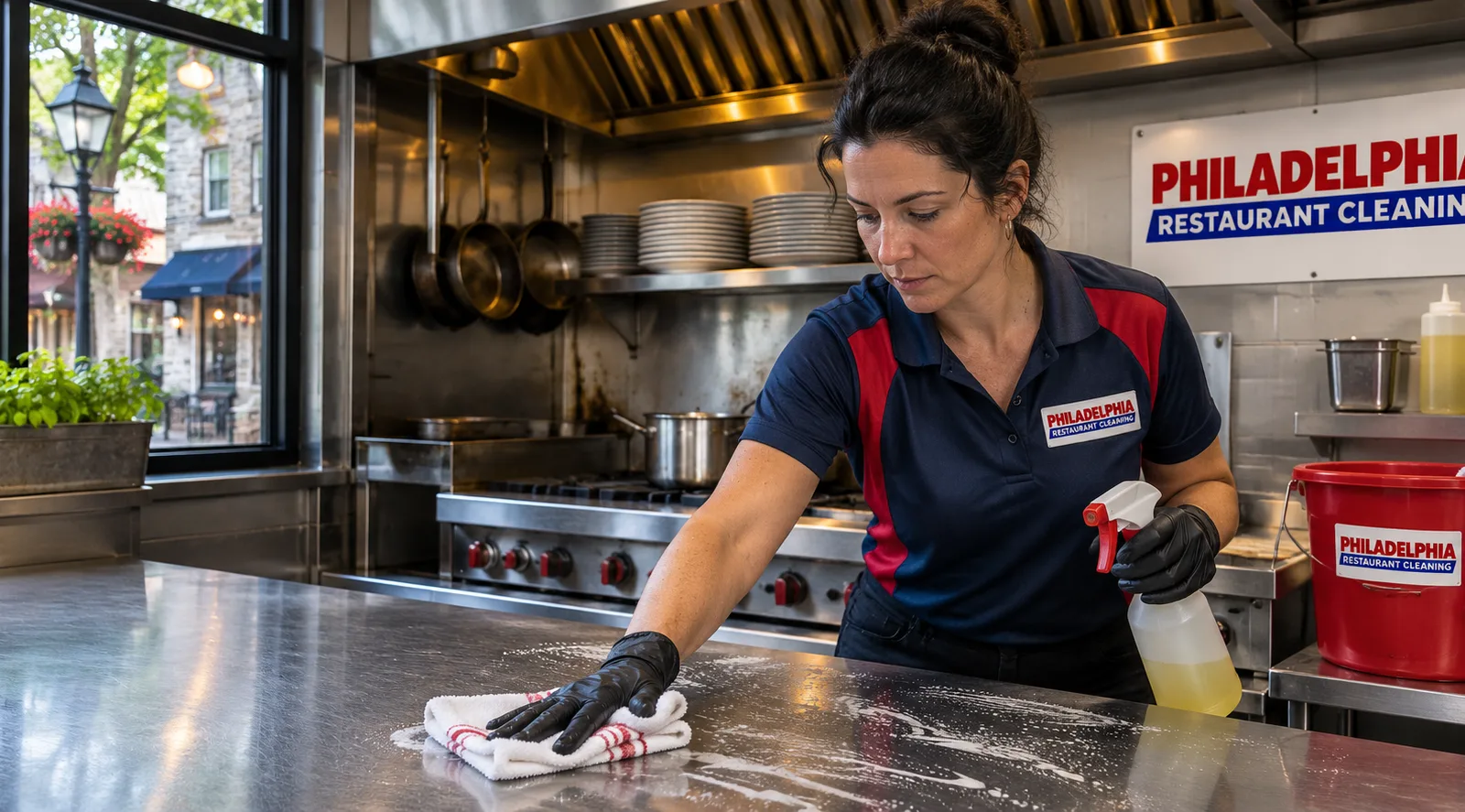
Restaurant Cleaning Chestnut Hill businesses can rely on should support daily operations without getting in the way of staff, deliveries, or guests. Philadelphia Restaurant Cleaning develops recurring and one-time scopes for dining rooms, bars, restrooms, food-preparation areas, cook lines, floors, and back-of-house spaces. Work can be planned around opening, closing, or another agreed access window.
Our team starts by learning how the restaurant operates. A counter-service café has different traffic patterns than a full-service dining room, and a compact kitchen requires a different sequence than a larger cook line. We identify surfaces, equipment exteriors, soil levels, access restrictions, and areas that need particular attention. Using those details, Philadelphia's local restaurant service creates a practical checklist rather than applying the same routine to every property.
Chestnut Hill's commercial activity is concentrated along Germantown Avenue, where restaurants may need cleaning completed between close and the next day's preparation. Nearby Mount Airy establishments often balance dining-room presentation with compact back-of-house work areas. In Center City, limited loading access and tightly scheduled deliveries can affect arrival and waste-handling plans. These operating conditions matter because a dependable scope must fit the property as well as the cleaning tasks.
Back-of-house detail
Commercial Kitchen Cleaning in Chestnut Hill
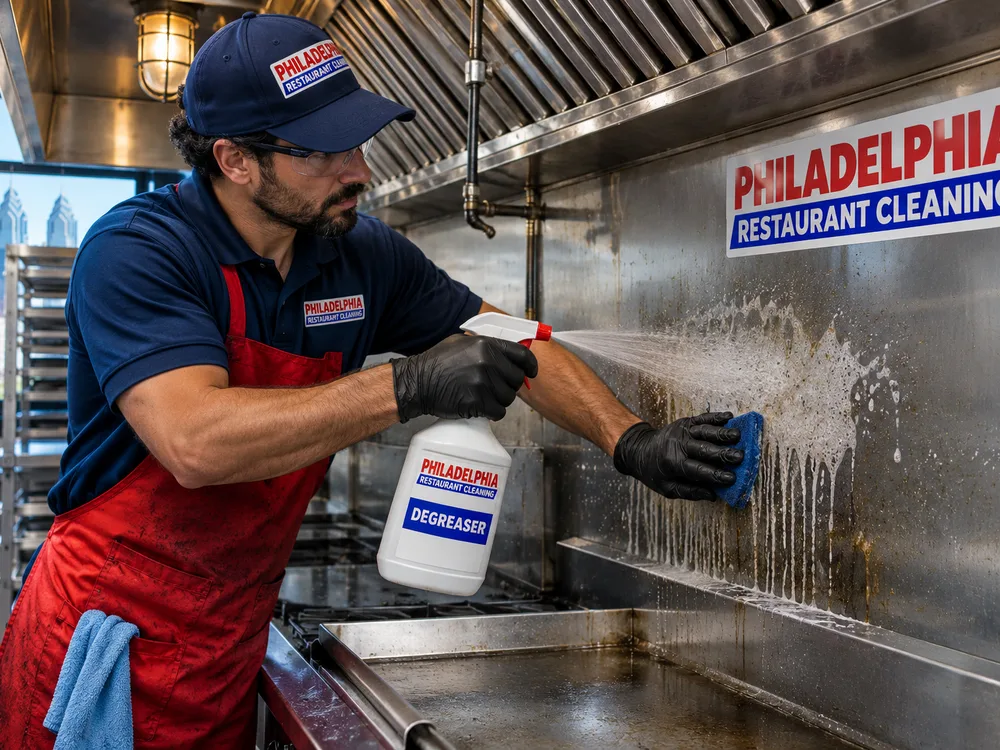
A commercial kitchen accumulates grease film, food residue, crumbs, and tracked soil during normal production. Cleaning should follow a deliberate sequence: remove loose debris, apply a surface-compatible cleaner or degreaser, allow the required dwell time, agitate where needed, rinse when the product directions call for it, and leave food-contact surfaces ready for the restaurant's sanitizing procedure.
Typical scope items include preparation tables, sinks, shelving fronts, equipment exteriors, backsplash areas, reachable wall surfaces, floor edges, mats, and the floor beneath movable equipment when access is approved. High-touch points such as handles, switches, push plates, and cooler doors can be included. Cleaners must never mix incompatible chemicals, and product labels determine dilution, contact time, rinsing, and required personal protective equipment.
Routine commercial kitchen cleaning does not automatically include exhaust-hood duct cleaning, fire-suppression components, internal appliance repair, pest treatment, or grease-trap pumping. Those tasks require separate scopes and, in some cases, specialized contractors. We define boundaries before work begins so managers know exactly which surfaces and areas are included.
Complete cleaning scope
A Cleaning Scope Built for the Whole Restaurant
Dining and guest areas
Tables, chair frames, booths, ledges, entrance glass, host stations, and hard floors can be cleaned after guests leave. The scope accounts for the finish on wood, stone, metal, glass, or upholstered surfaces.
Kitchen and preparation zones
Reachable food-preparation surfaces, equipment exteriors, sinks, shelving fronts, backsplashes, and floor edges receive task-specific cleaning. Heavy grease areas may require staged degreasing rather than a quick wipe.
Restrooms and touchpoints
Fixtures, partitions, mirrors, dispensers, floors, door hardware, and other frequent-contact points are addressed with dedicated tools and chemicals to reduce cross-contamination between zones.
Floors and floor edges
Vacuuming, sweeping, mopping, scrubbing, and spot treatment are selected for the floor material and soil load. Corners, transitions, base edges, and areas under approved movable items are included when specified.
Bar and beverage areas
Bar fronts, accessible shelving, drip areas, mats, floor surfaces, and equipment exteriors can be added. Staff should secure beverages, garnishes, glassware, and exposed consumables before cleaning starts.
Back-of-house support spaces
Storage-room floors, employee areas, waste staging points, and delivery access routes can be included when they are part of the agreed work area. Clear aisles help the crew clean thoroughly and safely.
From walkthrough to review
How Restaurant Cleaning Is Planned and Completed
-
01
Walk through the restaurant
We review the dining room, kitchen, restrooms, storage areas, access points, floor materials, and equipment clearances. Managers can identify recurring trouble spots, restricted surfaces, and tasks already handled by restaurant staff.
-
02
Define the written scope
The plan lists included areas, task frequency, access arrangements, and exclusions. It also distinguishes routine cleaning from periodic deep work such as floor scrubbing, detailed edge cleaning, or buildup removal behind movable equipment.
-
03
Coordinate access and preparation
The restaurant confirms entry procedures and secures food, knives, glassware, cash, and sensitive equipment. Cleaning products are matched to surfaces, and tools are separated by work zone to limit cross-contamination.
-
04
Clean in a controlled sequence
Crews generally work from cleaner areas toward dirtier areas and from higher surfaces toward floors. Loose soil is removed before wet cleaning, and chemical dwell times are followed instead of wiping products away immediately.
-
05
Review and adjust
Completed work is checked against the agreed list. For recurring service, feedback can be used to refine priorities as menus, operating hours, staffing patterns, or seasonal foot traffic change.
The right care at the right interval
Deep Cleaning and Recurring Maintenance Serve Different Needs
Recurring cleaning controls the soil produced during ordinary service. Depending on the agreed schedule, it may cover dining-room floors, restrooms, touchpoints, preparation surfaces, equipment exteriors, and common back-of-house areas. A consistent checklist helps prevent small deposits from becoming hardened grease or embedded floor soil.
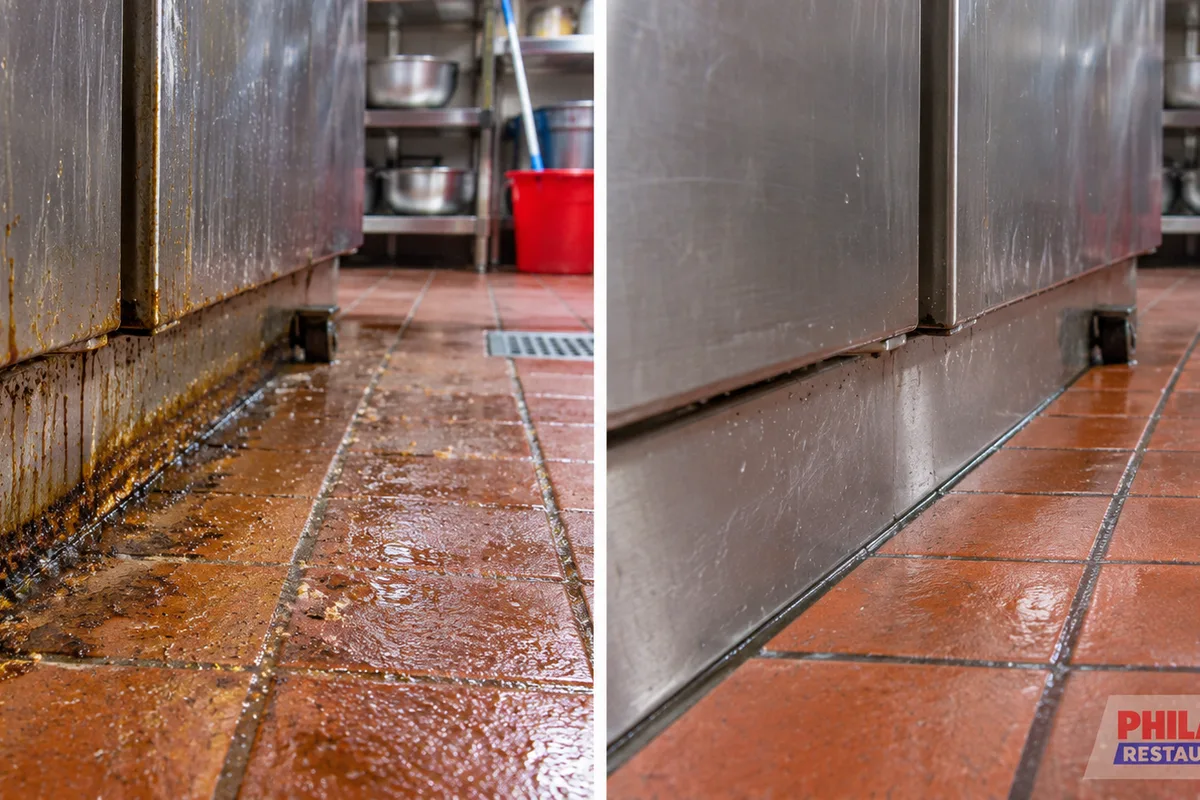
Deep cleaning addresses accumulated buildup and tasks that take longer than a routine visit. This may include detailed base edges, floor scrubbing, reachable walls, shelving, grout lines, and approved spaces behind or beneath movable equipment. Restaurants often schedule deeper work before a reopening, after construction dust has been contained, following a major event, or when a neglected area needs to be brought back to a maintainable condition.
Philadelphia's humid summers can increase tracked moisture and odor concerns around entrances, mats, waste staging areas, and enclosed back-of-house spaces. Winter precipitation brings grit and deicing residue onto hard floors. Entry mats, frequent soil removal, and floor-care methods suited to the finish help limit abrasion and slippery residue during these periods.
Surface-aware sanitation
Sanitation Depends on the Right Product and Procedure
Cleaning and sanitizing are separate steps. Cleaning removes food residue, grease, and other soil. Sanitizing follows on an already cleaned surface and uses an approved product at the concentration and contact time stated on its label. Applying sanitizer over visible soil does not replace cleaning.
The Philadelphia Department of Public Health regulates food establishments within the city, but a cleaning company does not replace management's food-safety program or the duties assigned to restaurant employees. Managers remain responsible for food handling, temperature control, warewashing procedures, sanitizer testing, pest controls, and compliance with applicable requirements. Our work supports that program by completing the contracted cleaning tasks consistently.
Material compatibility also matters. Stainless steel, sealed tile, grout, natural stone, finished wood, vinyl, and rubber flooring do not all tolerate the same chemical or scrubbing pad. The crew should know the surface before treating a stain or deposit. When a finish or coating is uncertain, a small test area and manufacturer guidance are safer than aggressive cleaning.
A written restaurant cleaning scope gives managers a clear schedule, defined responsibilities, and a practical plan for keeping front- and back-of-house areas ready for service.
Call for a Free QuoteClear answers before scheduling
Questions Restaurant Managers Ask Before Scheduling
How much does restaurant cleaning cost in Chestnut Hill?
Restaurant cleaning is usually priced after the property, schedule, and soil level are reviewed because there is no reliable flat rate for every operation. Cost drivers include kitchen and dining-room size, cleaning frequency, floor type, grease buildup, restrooms, equipment access, and whether the work is routine or restorative. A Germantown Avenue café with a compact preparation area will require a different labor plan than a full-service restaurant with a larger cook line. The final price is confirmed in a written scope after an assessment.
Can cleaning take place after the restaurant closes?
Yes, restaurant cleaning can be scheduled for an agreed window after closing, before opening, or during another period that does not conflict with service. The best time depends on staff departure, food storage, waste removal, alarm procedures, deliveries, and the time needed for floors or treated surfaces to dry. Chestnut Hill restaurants should also account for access and parking conditions along Germantown Avenue when setting the crew's arrival plan.
How often should a commercial kitchen be professionally cleaned?
The right frequency depends on production volume, menu, operating days, staffing, and the amount of grease or food debris generated. High-use floors and touchpoints may need attention every service day, while detailed edges, reachable walls, shelving, and spaces beneath movable equipment may follow a periodic rotation. A walkthrough establishes which tasks belong on each visit and which should be scheduled less often.
Do you clean restaurant exhaust hoods and ducts?
Routine kitchen cleaning should not be assumed to include the internal hood, filters, ductwork, exhaust fan, or fire-suppression system. Those components need a separately defined service performed by appropriately qualified providers. We can clean agreed exterior and accessible surrounding surfaces, but the written scope will identify boundaries before work starts.
What should staff do before the cleaning crew arrives?
Staff should secure or remove exposed food, utensils, knives, glassware, cash, and personal items before cleaning begins. They should also identify hot equipment, damaged surfaces, chemical restrictions, alarm instructions, and anything that must not be moved. Clear floor access around preparation areas, bars, and storage aisles helps the crew complete the agreed work without disrupting protected items.
Can you provide one-time deep cleaning before an inspection or reopening?
Yes, a one-time deep cleaning can target agreed buildup before an inspection, reopening, management change, or return to regular maintenance. The scope may include detailed floors, base edges, accessible walls, equipment exteriors, shelving, and approved areas behind movable items. Cleaning improves physical conditions, but it does not guarantee an inspection outcome because food handling, refrigeration, pest controls, plumbing, and other operating requirements remain the restaurant's responsibility.
Does Commercial Kitchen Cleaning Chestnut Hill include food-contact sanitizing?
Food-contact sanitizing can be included only when the surfaces, products, responsibilities, and preparation steps are clearly defined in advance. Soil must first be removed, and the sanitizer must be used according to its label for concentration, contact time, and any rinsing requirement. Restaurant management should confirm how this contracted work fits its established food-safety and warewashing procedures.
Plan a Cleaner Restaurant Around Your Operating Hours
Tell Philadelphia Restaurant Cleaning about the size of your dining room, kitchen layout, current condition, and preferred schedule. We will help define the work areas, priorities, frequency, and access plan before service begins.