Kitchen deep cleaning · Philadelphia
Kitchen Deep Cleaning
Detailed cleaning for hard-working restaurant kitchens, including equipment, walk-in coolers, elevated surfaces and the areas routine shifts cannot fully address.
Built for working kitchens
Professional Cleaning Built Around Your Kitchen
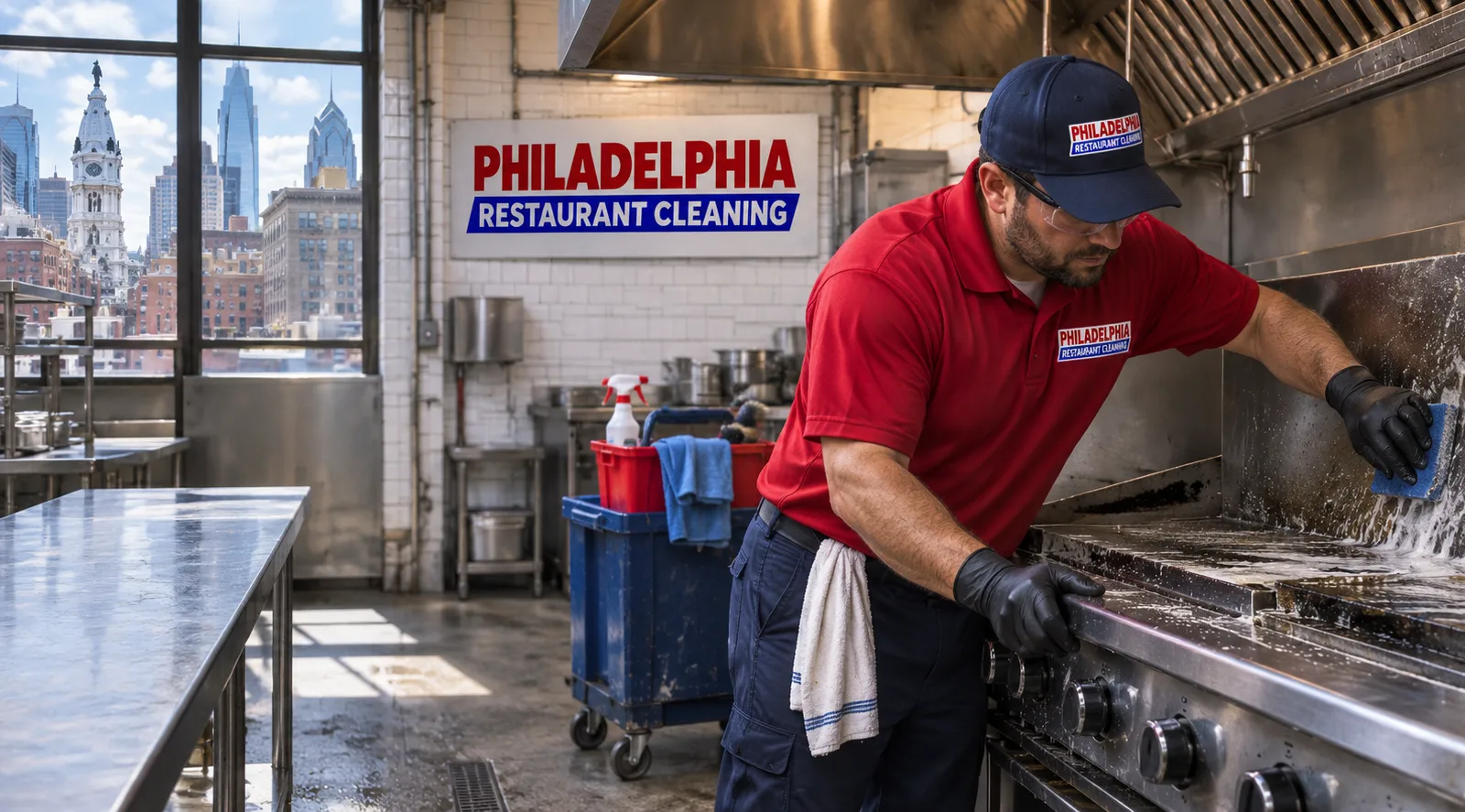
Kitchen Deep Cleaning removes accumulated grease, food residue, dust and soil from areas that daily closing routines often cannot reach. Philadelphia Restaurant Cleaning builds the scope around your equipment, operating schedule and problem areas rather than applying the same checklist to every facility.
Our team can work through cooking lines, preparation spaces, storage areas, walk-in units and elevated surfaces. Each plan identifies what is included, what must be moved, and whether equipment needs to be shut down or cooled before work starts. We are Philadelphia's restaurant specialists, and we understand that cleaning must fit around deliveries, prep periods, service and reopening deadlines.
The work is useful before an inspection, after a busy season, during a management change or as part of scheduled preventive maintenance. Restaurants in Center City often have compact kitchens with tight access and limited staging space. South Philadelphia row-building storefronts may have narrow rear access, while University City food operations frequently work around campus-driven peaks. These conditions affect crew size, equipment movement and scheduling, so they belong in the plan from the start.
Detailed cleaning scope
What Restaurant Deep Cleaning Services Can Cover
Cooking Lines and Equipment Exteriors
Degreasing for ranges, fryers, ovens, grills, salamanders, stainless panels and accessible equipment sides. The scope can include pulling movable units when utilities and manufacturer requirements allow.
Floors, Walls and Base Areas
Detailed cleaning targets grease films, soil along wall edges, grout lines, floor-to-wall junctions and residue beneath accessible equipment. Cleaning methods are selected for the surface and condition.
Preparation and Storage Areas
Worktables, shelving, sinks, racks and other accessible food-preparation surfaces are cleaned according to the agreed scope. Food, utensils and exposed ingredients must be protected or removed first.
Walk-In Cooler Cleaning
Walk-in cooler cleaning can address shelving, walls, floors, door surfaces and gaskets after food is removed or securely protected. Evaporator coils, fans and electrical parts require separate handling and may need a qualified technician.
High Dusting
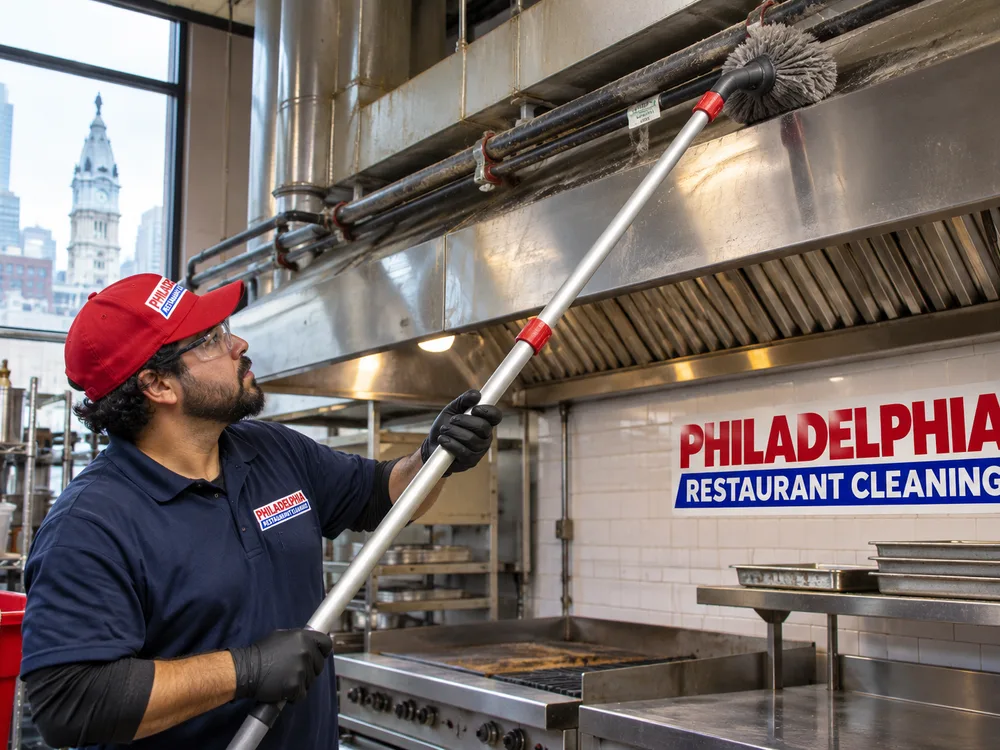
High dusting removes buildup from accessible pipes, ledges, conduit and other overhead surfaces using suitable extension tools or access equipment. Work is planned to keep loosened dust away from food and clean preparation areas.
Waste and Wash Areas
Detail work can cover accessible surfaces around dishwashing stations, utility sinks, waste zones and floor drains. Drain interiors, plumbing repairs and pest treatment fall outside ordinary cleaning unless specifically arranged.
Methods matched to the space
Commercial Kitchen Deep Cleaning in Philadelphia
Restaurant kitchens collect different types of soil in different zones. Aerosolized cooking grease settles on nearby walls, equipment and overhead surfaces. Carbonized residue develops around hot-line equipment. Cooler spills can collect beneath shelving and around door thresholds. A useful scope separates these conditions instead of treating them as one cleaning task.
Older commercial spaces in areas such as Old City can present tight stairways, irregular utility placement and limited room to move equipment. In the Italian Market area, narrow storefront layouts may require staged cleaning so one zone remains clear for tools and removed racks. Fishtown restaurants operating in converted commercial or industrial spaces may have taller ceilings, which changes the access plan for high dusting.
Philadelphia's humid summers also make prompt attention to spills and organic residue especially sensible in coolers, storage rooms and waste areas. Our restaurant deep cleaners inspect access, surface materials and buildup before selecting degreasers, agitation tools, wet-cleaning methods or dry high-dusting techniques. Product labels, safety data and equipment instructions guide chemical use and dwell time.
From walkthrough to handover
How a Restaurant Detailed Cleaning Is Planned
-
01
Walk Through the Facility
We review the cooking line, walk-ins, storage spaces, wash area and overhead surfaces. The walkthrough identifies heavy buildup, access restrictions, sensitive equipment and areas that need special preparation.
-
02
Set the Written Scope
The plan lists included surfaces, exclusions, equipment movement, food-storage requirements and the expected working window. It also records which utilities or appliances must be handled by restaurant staff or qualified trades.
-
03
Prepare and Protect
Food and clean utensils are removed or covered as appropriate. Equipment is cooled and isolated when required. Warning signs, floor protection and controlled work zones help keep staff away from active cleaning.
-
04
Clean in the Right Order
Crews generally work from high surfaces toward lower surfaces and from less soiled zones toward heavier grease areas when practical. Degreasers need label-directed dilution and dwell time before agitation and removal.
-
05
Review the Completed Scope
The final walkthrough checks the listed areas, identifies any access limitations and confirms that cleaning tools and waste have been removed. Restaurant management remains responsible for safe equipment startup and food handling before service resumes.
Planning your budget
How Much Does Kitchen Deep Cleaning Cost in Philadelphia?
Commercial kitchen deep cleaning in Philadelphia typically costs about $800 to $3,500, while large facilities, heavy grease buildup or multi-day projects may cost more. A limited hot-line or walk-in cooler cleaning may fall near the lower end; a full restaurant detailed cleaning with equipment movement and high dusting is priced higher.
Final cost depends on kitchen size, soil level, access, ceiling height, equipment density, overnight scheduling and the surfaces included. A walkthrough is the best way to define the work, and the exact cost is confirmed after inspection and scope review.
Cleaning Supports Your Sanitation Program
Professional restaurant deep cleaning supports a restaurant's sanitation program, but it does not replace daily cleaning, food-safety procedures or maintenance by qualified technicians. Philadelphia food establishments are regulated by the Philadelphia Department of Public Health, and operators remain responsible for meeting applicable sanitation requirements. A cleaning company should never promise that one service guarantees an inspection outcome.
Specialized Systems Need Qualified Providers
Kitchen exhaust systems also need special treatment. Cleaning visible hood exteriors is different from servicing grease-removal devices, ducts and exhaust fans. Fire-protection and exhaust-system work should be assigned to properly qualified providers under the applicable requirements. Likewise, cleaners should not disconnect gas lines, repair refrigeration systems or open energized electrical components.
Access and Safety Are Agreed in Advance
A clear division of responsibility protects the restaurant and the crew. Before work begins, management should identify alarm procedures, emergency shutoffs, restricted areas and equipment that cannot be moved. This is especially important in occupied mixed-use buildings, where noise, water use and waste removal may need to be controlled during overnight work.
Planned care, clearer priorities
Why Scheduled Deep Cleaning Works Better
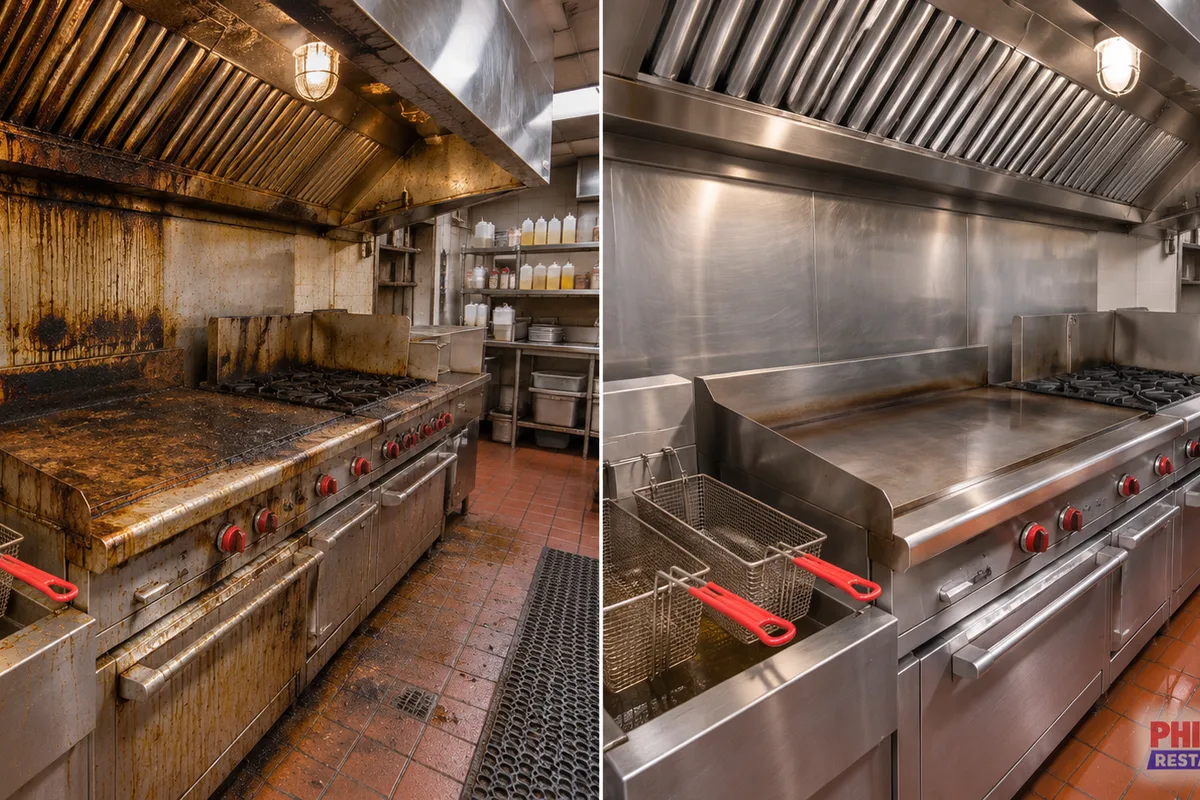
Waiting until buildup becomes severe usually makes access and scheduling harder. A planned program lets management select priority zones and coordinate cleaning with maintenance, inventory reduction or a temporary closure. The frequency should reflect cooking volume, menu, equipment and observed soil rather than an arbitrary calendar.
High-volume frying can create faster grease accumulation around the hot line. Flour and fine powders can settle on elevated ledges in bakeries and pizza operations. Walk-ins need attention when spills, package debris or residue around shelving cannot be handled adequately during normal shifts. Managers can use regular visual checks to decide when each zone needs another detailed service.
Philadelphia Restaurant Cleaning provides a defined scope for one-time projects and recurring professional restaurant deep cleaning. That scope helps managers compare completed work against the agreed list and keeps maintenance tasks separate from cleaning tasks.
Arrange a walkthrough before the next inspection, seasonal rush or planned shutdown so equipment access, preparation duties and working hours can be agreed in advance.
Call for a Free QuoteClear answers before scheduling
Questions About Restaurant Deep Cleaning in Philadelphia
How long does a restaurant kitchen deep clean take?
A focused area may take several hours, while a full commercial kitchen can require an overnight shift or multiple work periods. Equipment density, grease level, ceiling height and the amount of preparation all affect timing. Compact Center City kitchens may take longer than their floor area suggests because crews have less room to stage tools and move units.
Can cleaning be scheduled after the restaurant closes?
Yes, after-hours and overnight scheduling may be arranged when crew availability and building access permit. Management should account for cooling time, alarm access, loading restrictions and the time needed to return equipment to service. Mixed-use Philadelphia properties may also have building rules for late-night noise and waste removal.
Does walk-in cooler cleaning require removing all food?
Food should usually be removed from the active work area or sealed and relocated according to the restaurant's food-safety procedures. The cooler must remain within safe operating limits, and doors should not be left open longer than necessary. Refrigerant components, evaporator assemblies and electrical repairs are tasks for qualified refrigeration technicians.
Can you clean behind commercial kitchen equipment?
Accessible areas behind movable equipment can be included when the unit can be moved safely without disconnecting regulated utilities or violating manufacturer instructions. Restaurant staff should identify hard-connected gas, water and electrical equipment during the walkthrough. A licensed trade may be needed before cleaners can reach some spaces.
Is high dusting completed before lower surfaces?
Yes, overhead dusting is generally performed before final cleaning of counters, equipment exteriors and floors. This sequence allows dislodged dust to be captured during later passes. Tall ceilings or exposed utilities in converted Fishtown spaces may require lifts or specialized access equipment, which should be identified during inspection.
Will a deep clean guarantee that my restaurant passes inspection?
No cleaning provider can guarantee an inspection result because compliance also depends on food handling, temperatures, pest control, facility condition and management practices. Deep cleaning can address the surfaces listed in the scope, while the Philadelphia Department of Public Health determines regulatory compliance.
What should a restaurant do before the crew arrives?
Management should remove or protect food, clear personal items, cool designated equipment and provide access to agreed work areas. Staff should also identify sensitive controls, utility restrictions and appliances that cannot be moved. These duties should be written into the scope so the kitchen is ready when the scheduled work begins.
Plan a Cleaner, More Manageable Kitchen
Tell Philadelphia Restaurant Cleaning which areas need attention, when the kitchen is available and what equipment may require access. We will define the work and preparation requirements before cleaning begins.