Restaurant cleaning · Chester
Restaurant Cleaning Services in Chester
Dependable cleaning for commercial kitchens, dining rooms, restrooms, and service areas, scheduled around your hours and tailored to your venue.
Cleaning that fits your service
Reliable Restaurant Cleaning Services Chester Operators Can Schedule Around Service
Restaurant Cleaning Services Chester should support the way your venue operates, rather than interrupt prep, service, deliveries, or closing duties. Philadelphia Restaurant Cleaning creates practical scopes for independent restaurants, cafés, takeout counters, bars, and other food-service venues. Visits can be arranged around operating hours, with duties assigned by area and frequency.
Our team works as a professional restaurant company in Philadelphia serving Chester venues that need consistent attention and clear communication. Before recurring work begins, we discuss the layout, operating schedule, priority areas, access instructions, surfaces, and tasks already handled by employees. That preparation helps prevent duplicated work and makes responsibility clear.
Chester's commercial corridors and mixed-use properties can present different access needs. A compact storefront near Avenue of the States may require a tightly timed visit and careful equipment staging, while a venue near the waterfront or Subaru Park may need cleaning planned around event traffic. Restaurants along Edgmont Avenue can have different loading, parking, and closing arrangements. We account for those practical conditions when setting the schedule.
Front and back of house
Cleaning Built Around Food-Service Areas
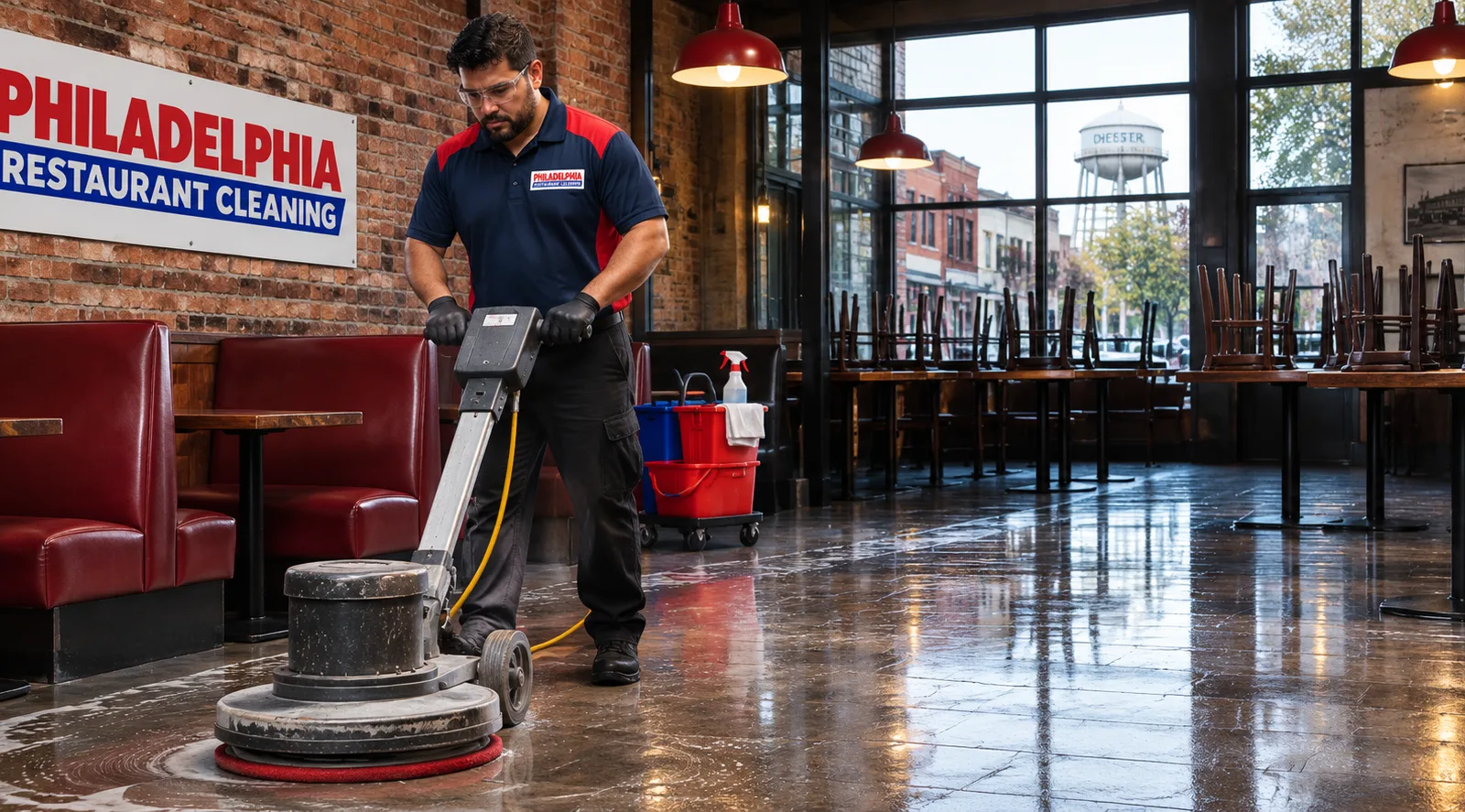
Restaurant cleaning is divided into zones so the correct products, tools, and cloths stay with the correct task. In dining areas, the work may include tables, chair backs, partitions, ledges, touchpoints, entry glass, and floor care. Restroom duties commonly cover fixtures, dispensers, mirrors, partitions, floors, and restocking when supplies are provided.
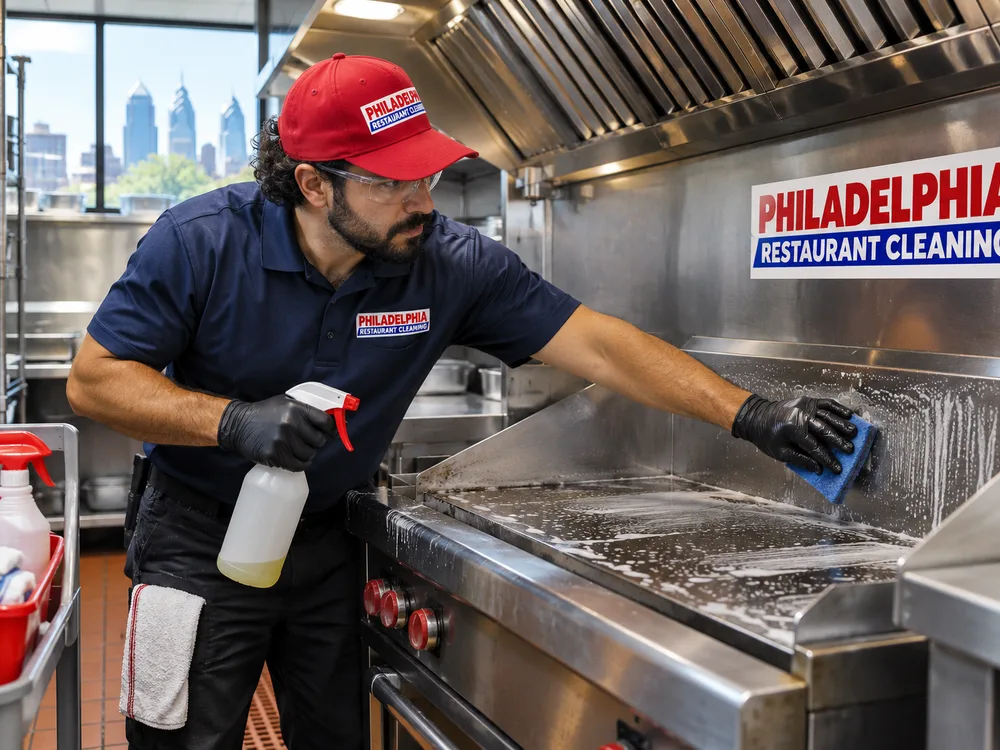
Back-of-house work requires a different approach. A written scope can include degreasing reachable exterior surfaces, cleaning prep-area floors, wiping equipment exteriors, addressing splash zones, and removing soil from corners and edges. Food-contact surfaces require products and procedures appropriate to the surface and your operating protocol. Cleaning removes soil; sanitizing follows cleaning and uses an approved product at the labeled concentration and contact time.
Commercial kitchen cleaning does not automatically include every specialized task. Exhaust hood and duct cleaning, pest control, grease-trap pumping, and equipment repair are separate services. We identify exclusions before work begins so managers know exactly what the routine covers.
Venue-wide scope
What a Restaurant Cleaning Plan Can Cover
Dining and Guest Areas
Vacuuming or mopping floors, wiping tables and chair backs, cleaning entry glass, dusting reachable ledges, and addressing fingerprints on common touchpoints.
Kitchen and Prep Areas
Floor degreasing, detail work along edges, splash-zone cleaning, and wiping reachable equipment exteriors after food and movable items have been cleared.
Restrooms
Cleaning and disinfecting fixtures and touchpoints, washing floors, polishing mirrors, and restocking customer-provided soap, tissue, and paper products.
Bars and Service Stations
Cleaning floors, reachable fronts, rails, shelving exteriors, and non-food-contact surfaces without disturbing organized stock or connected equipment.
Periodic Detail Work
Scheduled attention to baseboards, floor edges, vents within safe reach, wall spots, chair legs, and other areas that fall outside nightly close-down duties.
Floor Care
Surface-appropriate vacuuming, mopping, scrubbing, and machine cleaning based on floor material, finish condition, grease load, and available drying time.
From walkthrough to review
How Restaurant Cleaning in Chester Is Set Up
-
01
Walk Through the Venue
We review front-of-house and back-of-house areas, floor types, access points, storage limitations, soil conditions, and any surfaces that require product restrictions.
-
02
Define the Scope and Frequency
Tasks are separated into every-visit, weekly, and periodic duties. We also document exclusions, supply responsibilities, alarm or key procedures, and preferred arrival and completion windows.
-
03
Plan Around Operations
The schedule accounts for closing, opening prep, deliveries, and special events. Areas that must cool down, clear out, or remain accessible are identified in advance.
-
04
Clean by Zone
The crew follows the agreed task list and uses zone-specific tools to limit cross-contamination between kitchens, dining rooms, and restrooms.
-
05
Review and Adjust
Managers can report changing priorities, seasonal traffic, or recurring trouble spots. The scope can then be updated rather than relying on informal requests from shift to shift.
Surface-aware methods
Details That Protect Surfaces and Support Consistency
A sound plan matches chemistry and method to the surface. Neutral cleaners are often appropriate for routine finished-floor care, while alkaline degreasers may be used where compatible with grease-heavy kitchen surfaces. Abrasive tools can scratch stainless steel, acrylic, polished stone, or coated fixtures, so they should never be treated as universal scrubbers. Safety Data Sheets and manufacturer labels guide dilution, personal protective equipment, ventilation, and dwell time.
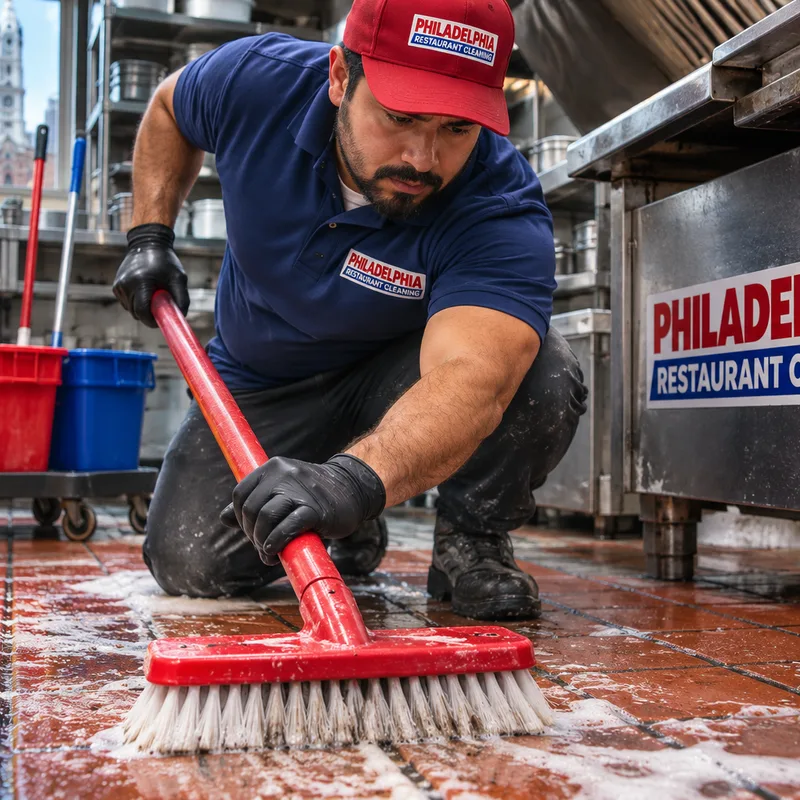
Floors also need specific treatment. Quarry tile and grout in a cook line collect soil differently from luxury vinyl tile in a dining room. Rubber mats need both sides addressed and must dry before replacement. Wet-floor signs and controlled access help protect employees when work overlaps with opening or closing duties.
Chester restaurants face wet winter foot traffic and humid summer conditions typical of southeastern Pennsylvania. Entry soil, road salt, grease migration, and slower drying can change floor priorities. The response may include extra mat attention, staged mopping, or more time for a floor to dry before employees return.
Ask for a written scope that names each area, task, and frequency. Phrases such as “deep clean the kitchen” can mean very different things. A useful scope states whether equipment will be moved, which equipment exteriors are included, who clears counters, whether consumables are supplied, and how periodic floor work is approved.
Confirm scheduling and access in equal detail. The provider should know when the last employee leaves, when prep begins, which doors may be used, where water and electrical outlets are available, and how a missed or delayed visit is communicated. If a venue is close to Subaru Park or another event-driven traffic area, access windows and parking instructions deserve particular attention.
Product compatibility matters too. Share manufacturer restrictions for specialty flooring, stone, wood, upholstered seating, and coated metal. Tell the cleaning team about allergies, fragrance preferences, or products prohibited by company policy. Managers should also separate routine janitorial work from regulated or specialist services such as exhaust-system cleaning, grease disposal, and pest management.
Philadelphia Restaurant Cleaning uses the walkthrough to turn these details into a practical plan. The goal is a repeatable routine that supervisors can review, crews can follow, and restaurant employees can coordinate with their own closing checklist.
A clear walkthrough and written scope make it easier to compare service, assign responsibilities, and set a cleaning schedule that fits your operating hours.
Call for a Free QuoteClear answers
Questions About Restaurant Cleaning Chester
How much do restaurant cleaning services in Chester cost?
Restaurant cleaning is usually priced after reviewing square footage, visit frequency, kitchen grease levels, floor types, restroom count, and the amount of periodic detail work required. A compact takeout venue and a full-service restaurant near Chester's waterfront have different labor, access, and equipment needs. A walkthrough is the reliable way to establish a written price and scope.
Can cleaning be scheduled after the restaurant closes?
Yes, restaurant cleaning can usually be planned after closing, before opening, or during another low-traffic window. The schedule must allow enough time for surfaces and floors to dry before employees begin prep. Access instructions are particularly important for locked mixed-use properties and venues affected by event traffic near Subaru Park.
Do you clean commercial kitchens as well as dining rooms?
Yes, a restaurant scope can include both commercial kitchen and dining areas when those spaces are reviewed in advance. Kitchen tasks may cover floors, splash zones, reachable equipment exteriors, and other agreed non-food-contact surfaces. Employees should remove or secure exposed food, utensils, and movable prep items before the crew begins.
Is restaurant cleaning the same as hood and exhaust cleaning?
No, routine restaurant cleaning and commercial kitchen exhaust-system cleaning are separate services. Hood, fan, and duct work requires specialist access and procedures. The recurring scope should state whether only reachable hood exteriors are included and should identify exhaust interiors as an exclusion unless separately arranged with a qualified provider.
How often should a Chester restaurant be professionally cleaned?
The right frequency depends on operating days, customer volume, menu, grease production, floor material, and the work completed by restaurant employees. High-use restrooms and cook-line floors may need attention each service visit, while baseboards, vents within safe reach, and detailed floor edges can follow a periodic rotation. Wet winter entry soil may justify temporary changes to floor care.
What should restaurant staff do before the cleaning crew arrives?
Staff should secure food, clear the agreed work surfaces, store knives and fragile items, remove personal belongings, and complete shutdown tasks that require trained restaurant employees. Hot equipment must be safe to approach, and any maintenance issue or spill requiring special handling should be reported before work starts. These steps give the crew safe access to the approved areas.
Can the cleaning checklist be changed after service begins?
Yes, the checklist can be revised when hours, menu operations, floor conditions, or traffic patterns change. Managers should request changes through the agreed contact rather than relying on verbal instructions given during a shift. A documented update keeps the crew's duties, frequency, and price aligned.
Ready for a Cleaner, More Consistent Restaurant?
Tell Philadelphia Restaurant Cleaning about your Chester venue, operating hours, priority areas, and preferred frequency. We will discuss the practical details and build a clear scope around your restaurant.